
The Gut Feeling You Can’t Ignore: How Fermented Foods Rewire Your HealthYour Inner Ecosystem: Reclaiming Vitality Through Living Foods
Welcome to FlexiGrid's Substack
Don’t recognize this sender? Unsubscribe with one click
FlexiGrid recently imported your email address from another platform to Substack. You'll now receive their posts via email or the Substack app. To set up your profile and discover more on Substack, click here.
Deep inside your gut, there’s a whole universe happening that most of us never think about — trillions of bacteria, fungi, and viruses doing quiet, essential work every single day. This community, the gut microbiome, weighs about as much as your brain. And it’s not just sitting there helping you digest lunch. It’s shaping your immune system, your metabolism, even your mood.
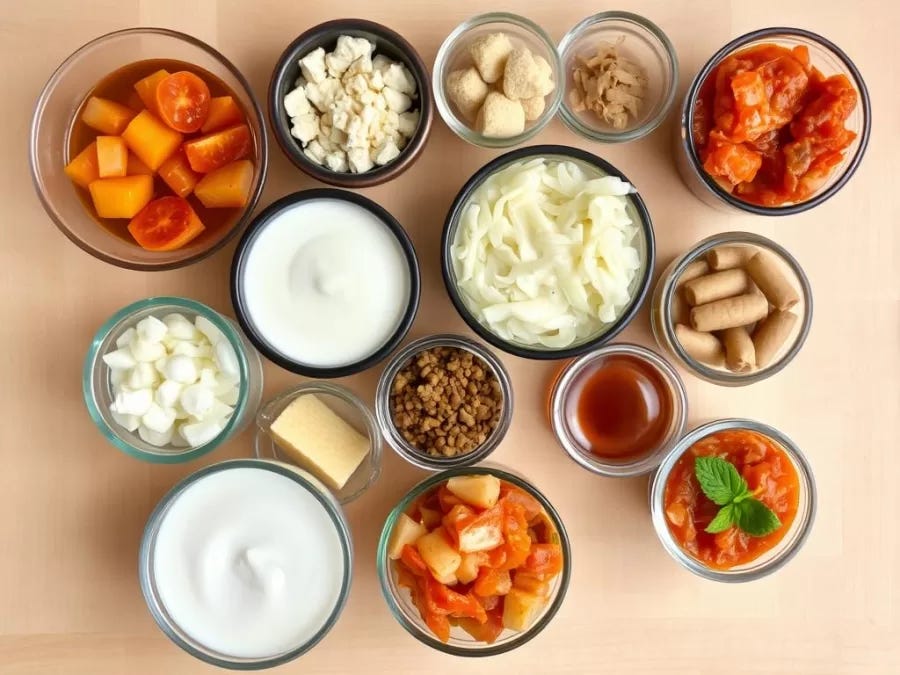
Here’s the thing though: this ecosystem takes a beating in modern life. Processed food, constant stress, environmental junk, antibiotics we didn’t always need — all of it chips away at the good bacteria, leaving room for the bad stuff to take over. That imbalance, called dysbiosis, doesn’t just show up as bloating. It can mean chronic inflammation, that dragging fatigue that never quite lifts, skin flare-ups, even mood swings that seem to come out of nowhere. The good news? You don’t need a cabinet full of supplements to fix this. Some of the oldest food traditions in the world — fermentation — already solved this problem long before anyone had a name for “probiotics.” So what’s the actual difference between probiotics and fermented foods? People use these words interchangeably, but they’re not quite the same thing. Probiotics are live microorganisms that, in the right amount, actually benefit your health. Fermented foods are what you get when you let microbes do their thing on food — breaking it down, transforming it, creating something new. Eat traditionally fermented food, and you’re getting a whole cast of beneficial bacteria, mostly Lactobacillus and Bifidobacterium strains — plus organic acids, enzymes, and bioactive compounds that show up along the way. Why bother? Here’s what the research actually shows. Better digestion, better absorption. Your gut bacteria break down fiber and carbs your body can’t handle on its own, and in the process, they produce short-chain fatty acids — butyrate being the standout. Butyrate feeds the cells lining your colon and helps keep your gut barrier intact, which matters if you’ve heard of “leaky gut.” Fermentation also breaks down anti-nutrients like phytic acid, allowing minerals such as iron, zinc, and magnesium to be absorbed instead of passing through. Your immune system learns from this stuff. Around 70% of your immune tissue lives in your gut. Beneficial bacteria essentially train your immune cells to recognize what’s harmless, what’s helpful, and what’s actually dangerous. Keep feeding your gut well, and you’re helping calm down inflammatory responses that would otherwise spiral. It talks to your brain, too. The gut and brain are in constant conversation through the vagus nerve and a steady stream of chemical signals. Fun fact — about 90% of your body’s serotonin gets made in the gut, not the brain. A well-fed microbiome also helps keep cortisol in check, which means better resilience against anxiety and that foggy, worn-down feeling. Dairy might not be the enemy you think it is. If regular milk bothers you, fermented dairy like yogurt or kefir often doesn’t — because the live cultures break down the lactose before it ever reaches your stomach. What to actually eat Powerhouse Fermented Foods to Include in Your Diet:
A word of caution before you dive in headfirst If your gut’s been running on empty for a while, suddenly loading up on fermented foods can backfire — bloating, gas, irregular digestion. It’s uncomfortable, but it’s usually just a sign things are shifting. Ease into it instead. Start with something small — a teaspoon of sauerkraut juice, a spoonful of yogurt, a sip of kefir. Give it a few weeks, working your way up slowly to normal serving sizes. If your body pushes back, don’t force it — just hold steady where you are for a bit before increasing again. And always check the label: pasteurization kills the very bacteria you’re after. It’s not just about what you add — it’s what you take away, too Probiotics need fuel to actually stick around and do their job, and that fuel comes from prebiotic fiber. Without it, the good bacteria you’re introducing won’t have much to live on. Garlic, onions, leeks, slightly green bananas, asparagus, oats, flaxseed, chia — these all feed the ecosystem you’re trying to build. At the same time, it helps to cut back on what’s actively working against you. Refined sugar feeds the bad stuff, like Candida. Chronic stress messes with gut motility and wears down your gut lining. Poor sleep throws off the microbiome’s natural rhythm. And medications like antibiotics or frequent NSAID use can do real damage if they’re not truly necessary. Conclusion This isn’t about chasing a quick fix or living on some restrictive protocol. It’s about building an environment where your body can do what it’s naturally built to do. Add a spoonful of sauerkraut to dinner tonight. Swap tomorrow’s cereal for plain yogurt with some berries and seeds on top. Small, consistent moves — that’s really all it takes. Your gut does the rest. You're currently a free subscriber to FlexiGrid's Substack. For the full experience, upgrade your subscription.
|





No hay comentarios:
Publicar un comentario